

The American Saddlebred and Kentucky's Enduring Legacy
There are horses admired for their speed.
There are horses celebrated for their strength.
And then there is the American Saddlebred—a horse admired because it seems born to carry itself with uncommon dignity.

No breed is more closely woven into the cultural fabric of Kentucky.
Its story is not merely one of ribbons and championships, but of farms lined with white fences, bluegrass pastures, generations of horsemen, and a tradition that has shaped the Commonwealth for more than two centuries.
The American Saddlebred did not arrive from another country fully formed. It was created here.
Its ancestry reaches back to the elegant Narragansett Pacer, the hardy Canadian Pacer, the refined Thoroughbred, the Morgan, and other influential American horses. Through thoughtful breeding, horsemen developed an animal capable of carrying riders comfortably over long distances while possessing remarkable presence, intelligence, and animation.
The result was something distinctly American.
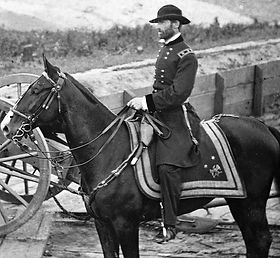
A horse equally at home beneath a country gentleman, in military service, on plantation roads, and eventually beneath the bright lights of the show ring.
Kentucky became its natural home.
The rich limestone soil that nourishes the famous Bluegrass pastures also produced generations of exceptional horses. Breeders refined bloodlines, trainers perfected presentation, and families devoted their lives to preserving a breed whose beauty lies not only in its motion but in its character.
To stand beside a great Saddlebred is to understand why so many artists have tried to capture it.
The arched neck.
The alert ears.
The bright eye.
The effortless elevation of each stride.
There is sculpture already present within the living horse.
For an artist, the challenge is simply revealing what nature has already created.
Long before I sculpted jewelry, I spent years studying horses from the saddle, at ringside, and with sketchbook in hand. Horse shows became classrooms where anatomy met expression. Every pass through the gate offered another lesson in balance, rhythm, and the subtle conversation between horse and rider.
No photograph can fully explain that experience.
Observation becomes memory.
Memory becomes drawing.
Drawing becomes sculpture.
That journey—from canvas to gold—begins with horses like the American Saddlebred.
Each original sketch teaches something new about proportion, muscle, and movement. Those lessons eventually find their way into the jewelry I create, where every curve is first understood as fine art before becoming wearable sculpture.
Perhaps nowhere is the breed's legacy more visible than during the summer and late summer show seasons in Kentucky.
From local county fairs to prestigious competitions, generations gather to celebrate horses whose pedigrees often stretch back through decades of careful stewardship. Families return year after year, passing along traditions as faithfully as treasured heirlooms.
Then comes Louisville.
Each August, the world's finest American Saddlebreds enter the historic green shavings of the championship arena. For exhibitors, trainers, owners, and spectators alike, it is more than a horse show.
It is a reunion.
A celebration.
A continuation of a tradition that has helped define Kentucky's identity for generations.
For many artists, inspiration arrives unexpectedly.
For me, it has always arrived wearing a bridle.
Every painting, every carving in wax, every finished piece of jewelry owes something to the horses that first taught me to observe rather than simply look.
The American Saddlebred remains one of those great teachers.
Elegant without vanity.
Powerful without arrogance.
Animated without excess.
It is, in many ways, Kentucky itself—gracious, enduring, and unmistakably original.
Some horses leave footprints.
The American Saddlebred leaves a legacy.
